technologybriefs
9:52in productionCh. 1 · Control First/ 9:52 · ceiling 15 min
Tech history · Hardware

Airplane

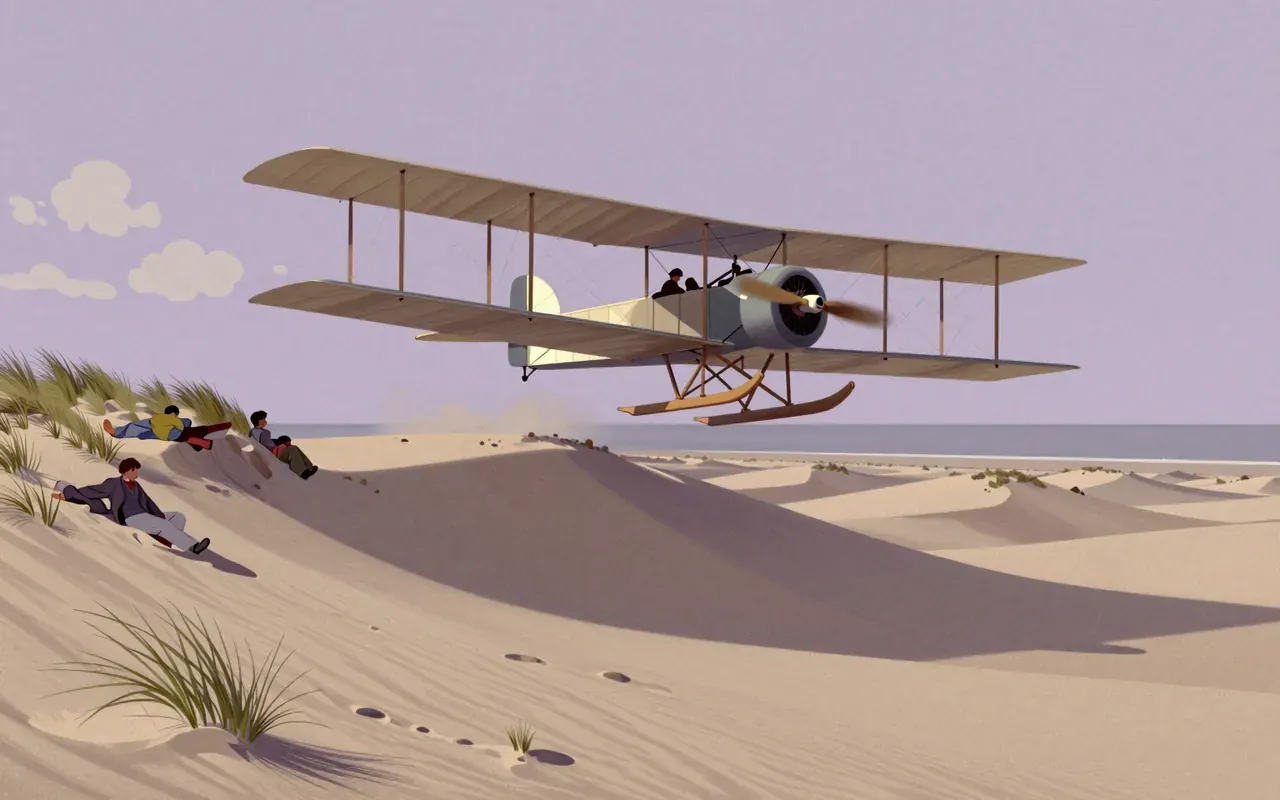
The airplane was invented when the Wrights patented how to steer it—not how to lift it.

The Wright brothers solved the flying problem by inventing a three-axis control system—not an engine or airframe—but their patent, glider, and first flight all hinge on one insight: without reliable pilot control, powered flight is impossible.

Chapters & takeaways4
  1. 1:12
    Control First

    They treated control—not lift or power—as the core problem.

  2. 3:18
    The Glider Was the Airplane

    The 1902 glider was the real invention; the 1903 Flyer was its motorised extension.

  3. 4:48
    A Patent for Steering, Not Flying

    Their patent claimed a method of surface manipulation—not a machine.

  4. 6:05
    The System That Stuck

    Three-axis control enabled stability, and remains universal.

Worth your time?

Yes. Study the whole thing.

4.5/ 5
What works
  • three-axis control system
  • wind-tunnel-derived aerodynamic data
  • 1902 glider as functional prototype
  • 1903 Flyer as first powered demonstration
What does not
  • achieve autonomous flight
  • carry passengers
  • use modern control surfaces
  • fly beyond minutes or miles without constant input
Study it if
  • control-system engineers
  • aviation historians
  • patent strategists
Skip it if
  • aerospace manufacturers building modern aircraft
  • AI developers seeking autonomy precedents
  • energy-system designers
The written brief1 min read

What it is and the problem it solves

It is a piloted, engine-powered, heavier-than-air flying machine that solves the problem of in-flight control—not just lift or propulsion.

How it works

It uses a three-axis control system—wing-warping for roll, forward elevator for pitch, and rear rudder for yaw—to manipulate aerodynamic surfaces in flight. The system was developed through wind tunnel testing and proven on the 1902 glider before being motorised.

What works

The 1902 glider’s control system works. The Wright Flyer achieves controlled, sustained, powered flight on December 17, 1903. By 1905, the Flyer III sustains stable, controllable flight for substantial periods.

What does not

It does not fly autonomously. It does not carry passengers. It does not use ailerons, flaps, or hydraulics. It does not achieve sustained flight beyond minutes or miles without pilot input.

What it changes

It changes how aircraft are controlled: the three-axis system becomes standard on all fixed-wing airplanes. It shifts patent focus from machines to methods of control.

Is it worth your time

Yes—if you work on control systems, aviation history, or patent strategy. It demonstrates how solving pilot control—not lift or power—was the decisive engineering breakthrough.

Same field · Tech history4 of 139
Up next in Technology

Amazon Echo

Amazon · 2014 · 9:38

The Echo didn’t invent voice control—it outsourced intelligence, made listening permanent, and turned the home hub into an afterthought.

9:38