The first automobile wasn’t invented in a lab—it was stress-tested by a woman who drove it 106 km without telling her husband.
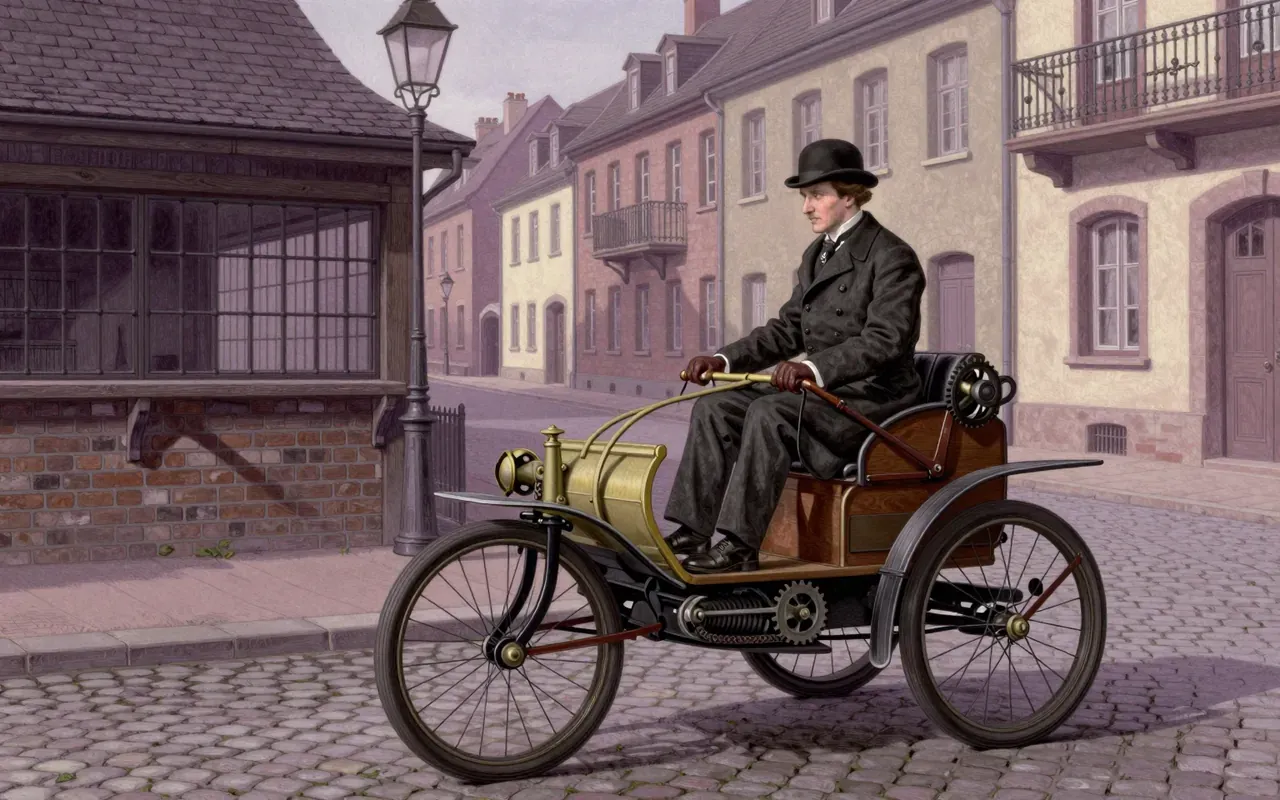
The Benz Patent-Motorwagen is the first gasoline-powered automobile built in series and proven in extended real-world use. Its mechanism—four-stroke engine, belt-and-chain drive, evaporative cooling—was functional but limited. Its breakthrough was not theoretical elegance but empirical validation: Bertha Benz’s 1888 journey forced immediate, field-driven improvements. It changed nothing overnight—but it created the first reproducible template for what a car could be: a product, not a demonstration.
It was the first gasoline-powered automobile built in identical copies—and the first car put into series production.
2:41
Patent, Road Test, Public Drive—all in 1886
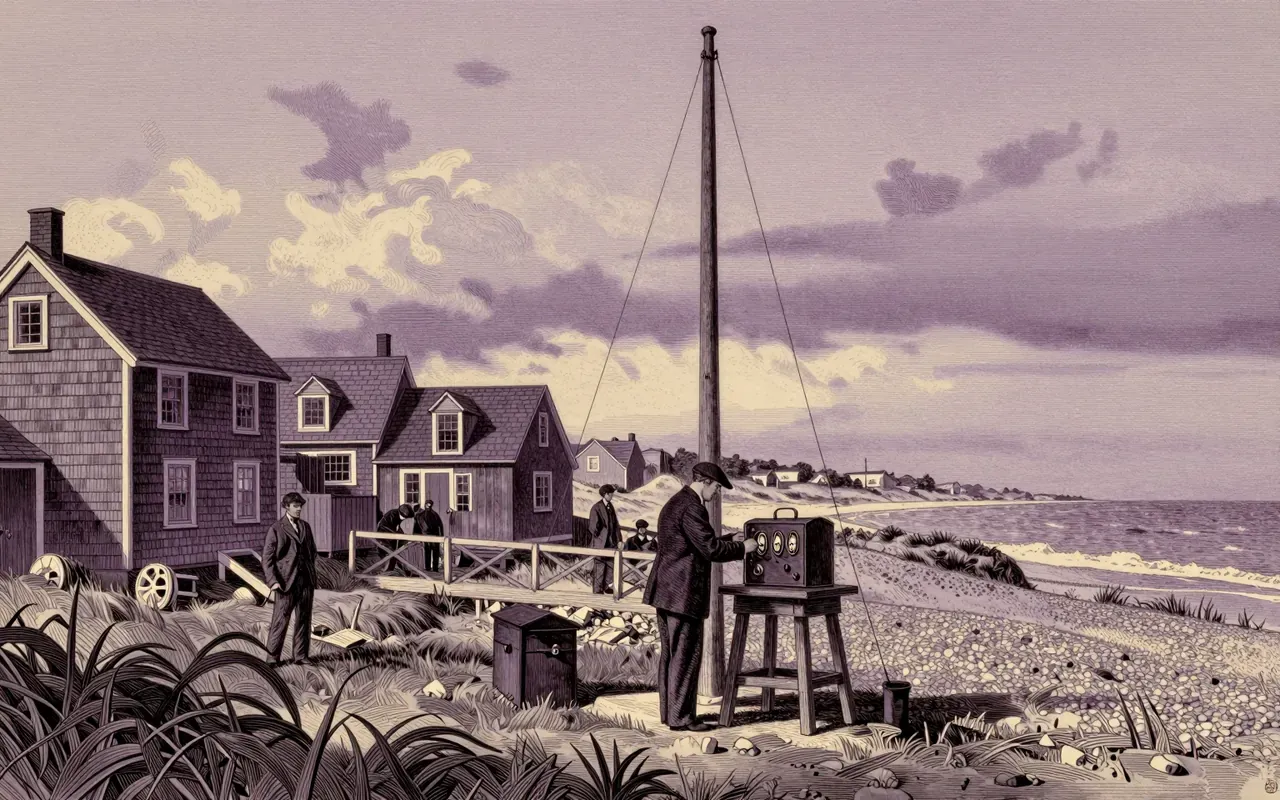
Benz publicly drove it on Mannheim’s Ringstrasse on 3 July 1886—after patenting it in January and road-testing it that same summer.
4:45
Field Testing Forged the Design
Bertha Benz’s 1888 journey proved extended travel was possible—and directly led to the third gear and brake pads.
6:25
First Modern Car: Practical, Marketable, Reproducible
The Patent-Motorwagen Model 2 entered series production in 1887 and is considered the first practical, marketable automobile for everyday use.
Worth your time?
Yes. Study the whole thing.
4.5/ 5
What works
It ran reliably enough for Bertha Benz to drive 106 km from Mannheim to Pforzheim and back in August 1888.
It entered series production in 1887.
It entered commercial sale in late summer 1888.
It directly led to the addition of a third gear and invention of brake pads.
What does not
It could not climb hills unaided in its original two-gear configuration.
Its evaporative cooling was rudimentary.
It had no reverse gear.
It offered no passenger protection or weather shielding.
Study it if
vehicle systems engineers
patent historians
early industrial design researchers
Skip it if
AI model developers
cloud infrastructure teams
cybersecurity analysts
The written brief1 min read
What it is and the problem it solves
A three-wheeled, gasoline-powered motor vehicle. It solved the problem of replacing horse-drawn transport with a compact, human-operated machine capable of independent propulsion on public roads.
How it works
It used a single-cylinder, four-stroke gasoline engine. Power travelled via belt and chain to the rear axle. It had coil ignition and evaporative cooling. Wire wheels carried its three-wheeled frame.
What works
It ran reliably enough for Bertha Benz to drive 106 km from Mannheim to Pforzheim and back in August 1888—without support, without infrastructure, and without prior route testing. It entered series production in 1887 and commercial sale in late summer 1888.
What does not
It could not climb hills unaided in its original two-gear configuration. Its evaporative cooling was rudimentary. It had no reverse gear. It offered no passenger protection or weather shielding.
What it changes
It established that a self-propelled vehicle could be built, patented, sold, and used for extended travel—not as a curiosity, but as a reproducible product with documented field performance.
Is it worth your time
Yes—if you work on vehicle systems, patent history, or early industrial design. It shows how user feedback directly shaped mechanical iteration: brake pads and a third gear emerged from one unauthorised road trip.