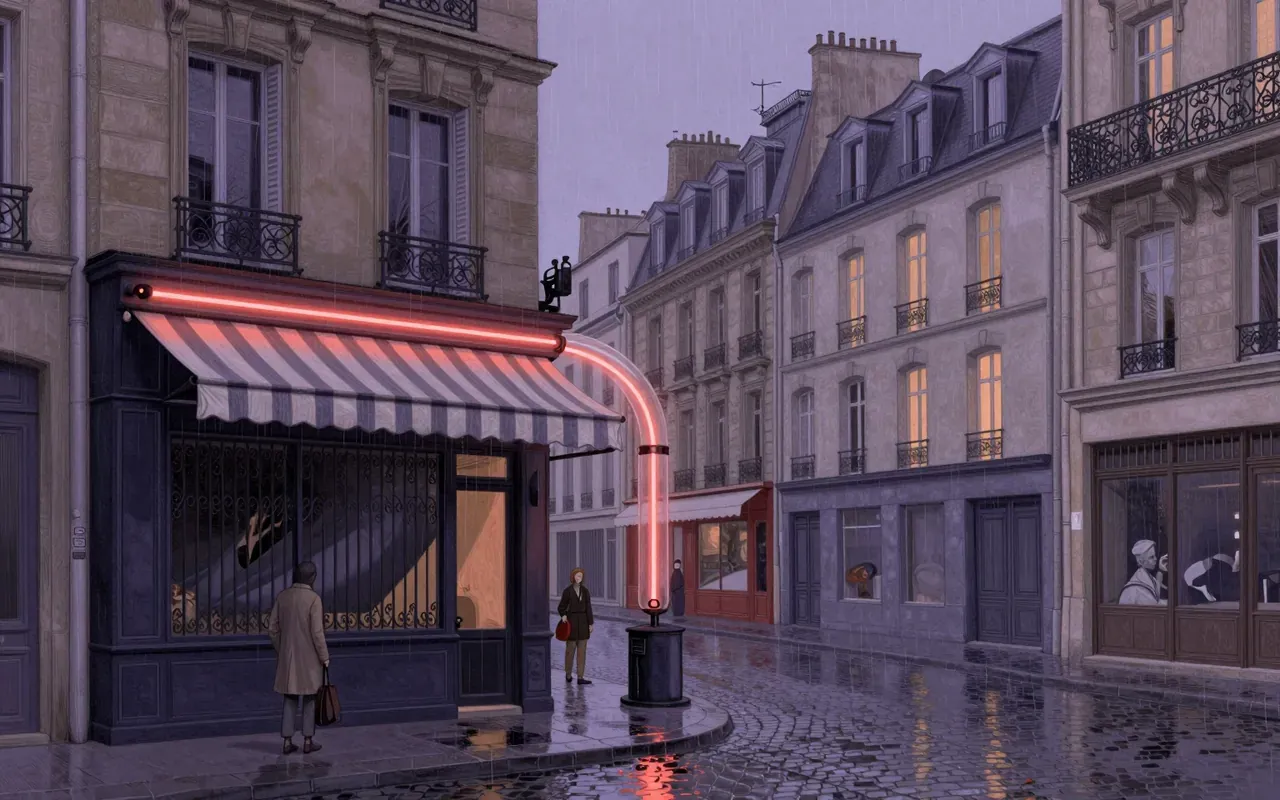
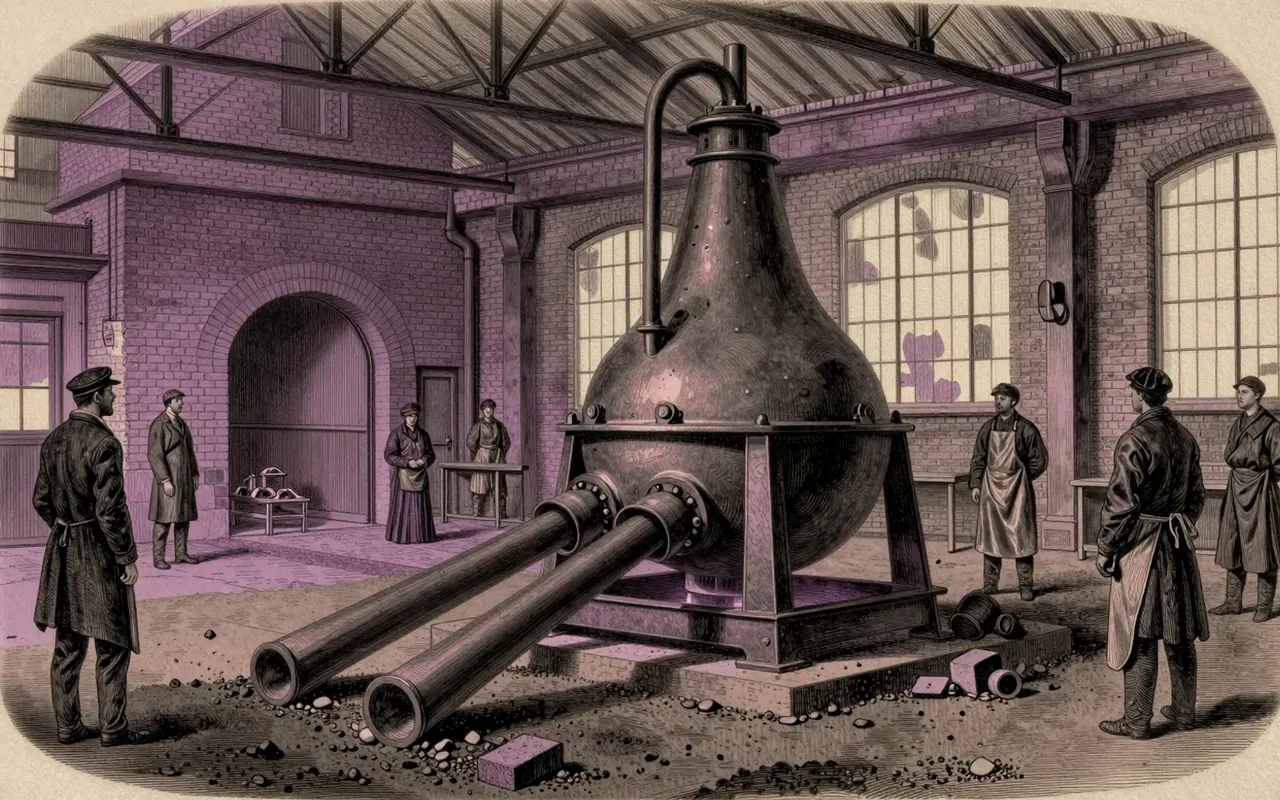
The barcode is a mechanically simple but commercially premature solution: a direct optical translation of Morse code into bars, read with repurposed cinema hardware. It worked in lab conditions but failed in practice—fading ink, no scanners, no standards, no buyers. Its value emerged only when retail infrastructure caught up, not because the invention matured.
A printed optical pattern that encodes alphanumeric data as variable-width bars. It solves the problem of rapid, unambiguous item identification in high-volume retail environments.
How it works
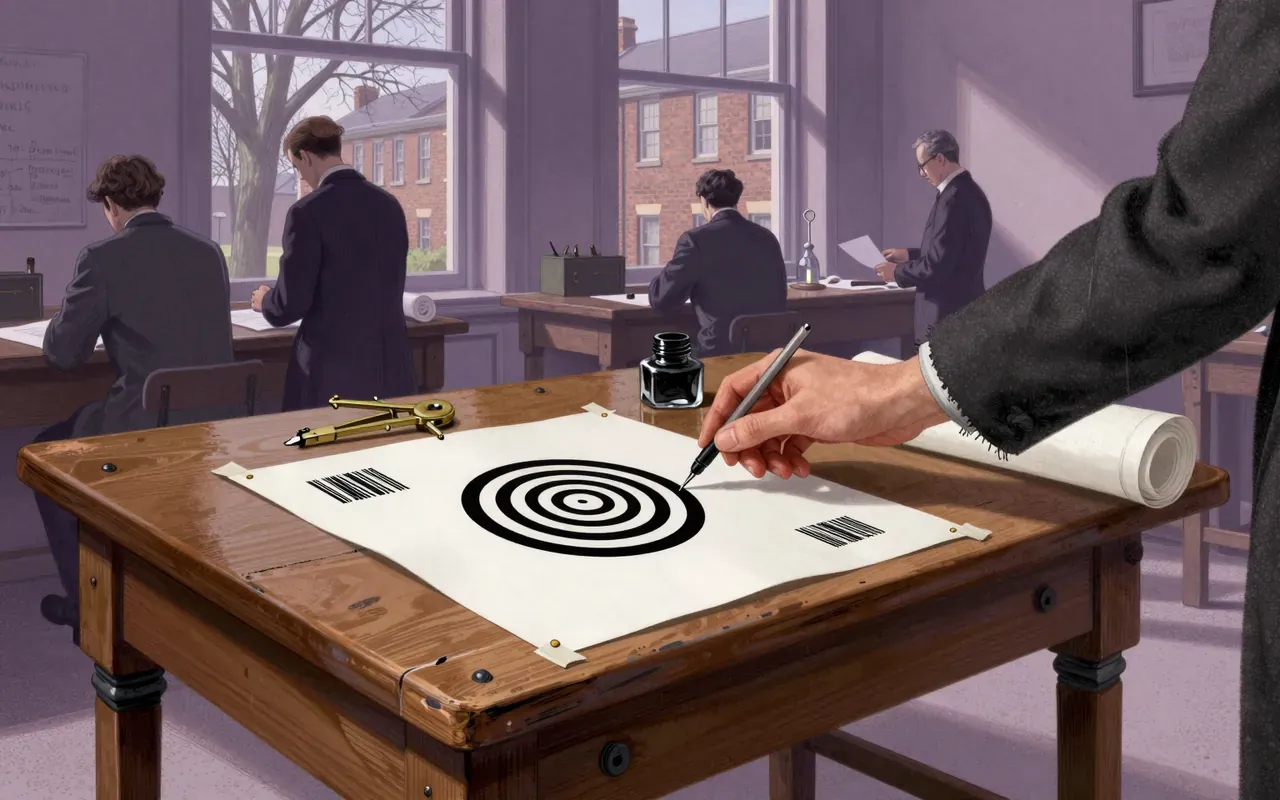
It extends Morse code dots and dashes into thin and thick vertical lines. It uses a 500W incandescent bulb and an RCA935 photomultiplier tube—borrowed from optical film soundtracks—to detect reflected or transmitted light. The bull’s-eye pattern enables omnidirectional scanning by rotating the code into a circle.
What works
The core idea—mapping symbols to bar widths and using photoelectric detection—works. Both linear and bull’s-eye patterns were described and prototyped. The patent covered functional reading systems, not just static marks.
What does not
The first UV-ink system failed: ink faded too easily and was expensive. The 1949 patent did not yield a commercially viable product. IBM rejected it in 1951. The invention solved no real-world problem until UPC adoption in 1974.
What it changes
It replaces manual key-entry with optical pattern recognition for item identification. It shifts data capture from human typing to machine reading—enabling speed, scale, and error reduction in inventory and checkout systems.
Is it worth your time
Yes—if you work on retail systems, supply-chain automation, or legacy hardware interfaces. Its mechanism is obsolete, but its design logic underpins every linear and 2D symbology in use today.