technologybriefs
10:14in productionCh. 1 · Convergence, not addition/ 10:14 · ceiling 15 min
Products · Hardware

Smartphone

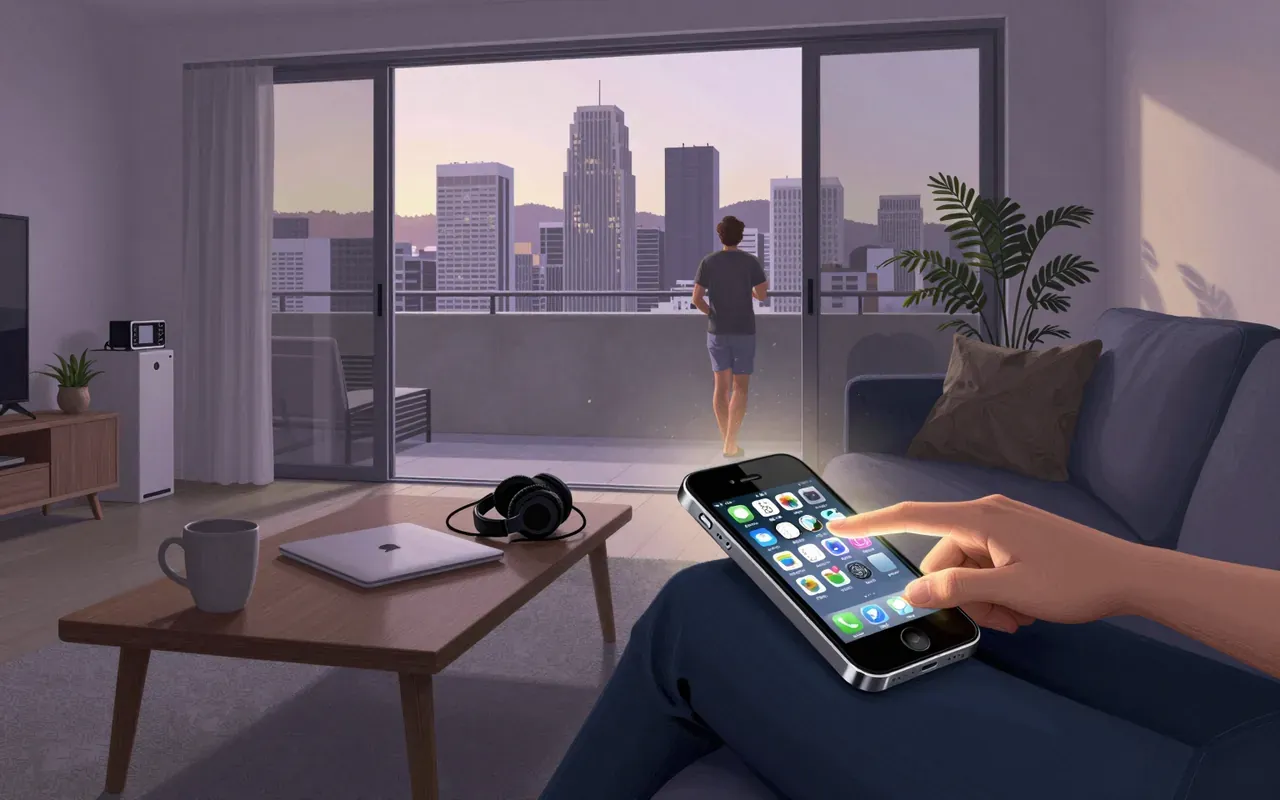
It is not a phone that computes—it is a computer that phones, and that asymmetry defines every trade-off.

The smartphone is a portable, sensor-rich, networked computer that prioritises app-driven flexibility over modularity, longevity, or open interoperability.

Chapters & takeaways4
  1. 1:05
    Convergence, not addition

    It is defined by convergence—not just added features, but fused functions.

  2. 3:02
    Hardware architecture

    MOS chips, sensors, and capacitive touchscreens are its physical foundation—not software alone.

  3. 5:18
    What ships and works

    Cameras, GPS, messaging, and app stores are working features—not promises.

  4. 6:30
    Late additions, not built-in

    Satellite messaging arrived only by the mid-2020s; growth relied on hardware and wireless advances since the early 2010s.

Worth your time?

Yes. Study the whole thing.

4.5/ 5
What works
  • built-in cameras
  • GPS navigation
  • voice and text messaging
  • internet-based messaging apps
What does not
  • delivers universal connectivity
  • sustains long-term software updates
  • decouples functionality from vendor-controlled ecosystems
Study it if
  • developers building mobile-first services
  • field workers needing location-aware tools
  • organisations deploying unified comms
Skip it if
  • users requiring deterministic latency
  • institutions needing 10+ year hardware lifespans
  • privacy-first operators avoiding cloud-linked sensors
The written brief1 min read

What it is and the problem it solves

A convergence device that solves the problem of fragmented personal computing and communication by integrating telephony, internet access, sensors, and programmable software in a pocket-sized form. It replaces separate tools—cameras, GPS units, MP3 players, PDAs—with one platform.

How it works

It runs a full mobile operating system on MOS integrated circuit chips. It uses multiple sensors and wireless protocols to handle voice, messaging, GPS, cameras, and internet access. It relies on capacitive touchscreens with multi-touch gestures instead of physical keyboards. App stores distribute third-party software.

What works

Built-in cameras, GPS navigation, voice calls, text messaging, and internet-based messaging apps all function reliably. Multi-protocol wireless support enables seamless handover between networks. Capacitive touchscreens with multi-touch gestures provide consistent input. App stores deliver functional, sandboxed software at scale.

What does not

It does not deliver universal connectivity: cellular coverage remains patchy, and satellite messaging is limited to emergencies and remote areas. It does not sustain long-term software updates: most devices receive OS upgrades for under four years. It does not decouple functionality from vendor-controlled ecosystems.

What it changes

It collapses telephony, computing, navigation, photography, payment, and media consumption into one always-on, location-aware, networked device. It shifts software distribution from pre-installed binaries to curated, centrally governed app stores. It makes sensor data a default input layer for applications.

Is it worth your time

Yes—if your work depends on portable, networked computing with sensor input, real-time communication, and extensible software. No—if you need deterministic performance, long-term hardware support, or offline reliability without satellite fallback.

Same field · Products4 of 10
9:40
HTC Vive2016The HTC Vive delivered the first commercially viable implementation of room-scale VR. Its lighthouse tracking system set a benchmark for positional accuracy. But it demanded space, setup rigour, and a high-end PC. Its consumer run ended decisively in 2021. What remains is a hardware reference point—not a platform, not a trend, but a working proof that movement matters more than resolution.
9:56
PlayStation 2Sony · 2000The PlayStation 2 is a home video game console developed by Sony Computer Entertainment, first released in Japan on March 4, 2000. It is the successor to the original PlayStation and a sixth-generation console that competed with Nintendo's GameCube, Sega's Dreamcast, and Microsoft's Xbox. It featured a built-in DVD drive and full backward compatibility with original PlayStation games and accessories. Its hardware included a custom-built Emotion Engine processor co-developed with Toshiba. It remains the best-selling video game console of all time, having sold 160 million units worldwide.
8:48
ChatGPT2022ChatGPT is a generative AI chatbot released by OpenAI on 30 November 2022. It uses generative pre-trained transformers (GPTs) to generate text, speech, and images. It was fine-tuned using supervised learning and reinforcement learning from human feedback (RLHF). It gained one million users in five days and 100 million in two months. In October 2023, DALL-E 3 was integrated for image generation. In March 2025, it was updated to use GPT Image instead. In February 2025, Deep Research launched — generating reports from web searches. In January 2025, Operator launched. In May 2025, Codex launched — capable of writing software, answering codebase questions, running tests, and proposing pull requests.
10:28
Intuitive Surgical1995Intuitive Surgical did not invent robotic surgery. It licensed SRI’s late-1980s research, incorporated in 1995, refined the system into 'Lenny', tested it in 1997, launched in Europe in 1999, and secured staggered FDA approvals from 2000 onward. It delivers telemanipulated, minimally invasive surgery—but only where approved, only with a surgeon present, and only as hardware, not intelligence.
Up next in Technology

Solvay process

Ernest Solvay · 11:08

Ammonia isn’t consumed—it’s rented, recycled, and reused: the Solvay process invented industrial catalysis before the word existed.

11:08