What it is and the problem it solves
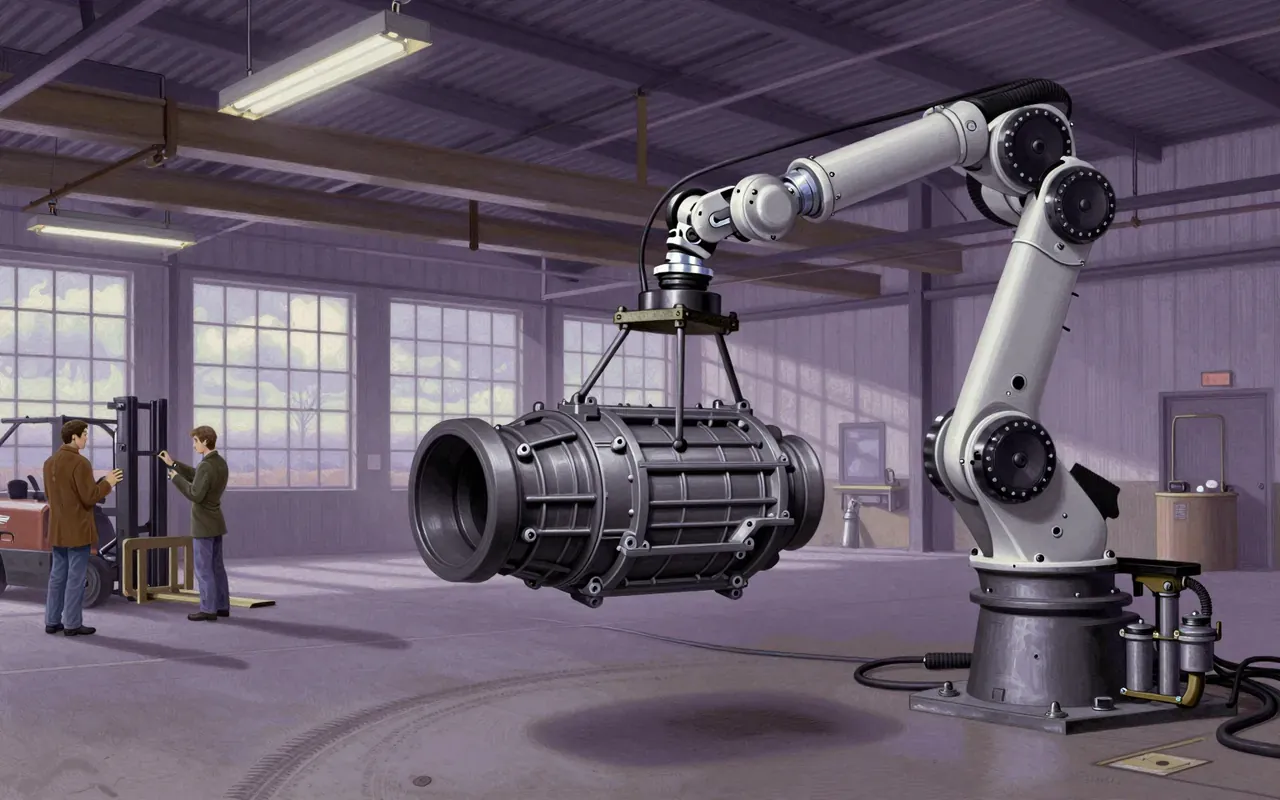
Unimate was the first industrial robot. It solved the problem of exposing workers to toxic fumes and limb injury during die-casting transport and welding on auto bodies at General Motors’ Inland Fisher Guide Plant in Ewing Township, New Jersey.
How it works
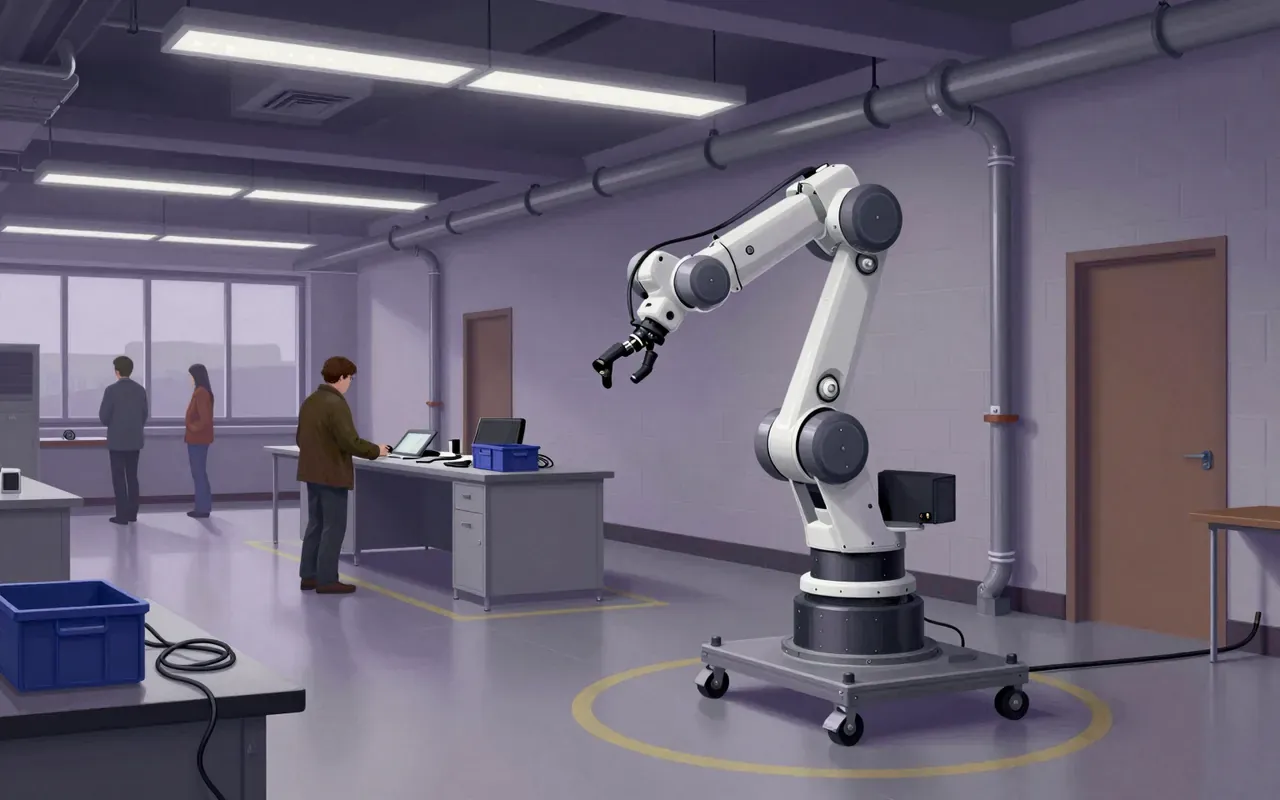
Unimate was a hydraulically actuated manipulator arm with 5 degrees of freedom. It recorded motion by manual teaching: an operator moved the gripper, and locations were saved on a magnetizable drum. Playback used timing references to synchronise curved-path movement. A fixed encoder array provided positional indexing, enabling deceleration near targets and self-correction during operation.
What works
Point-to-point movement worked reliably. Curved-path playback worked via drum-synchronised timing. Hydraulic actuation delivered sufficient force for die-cast handling. Encoder-based deceleration and positional self-correction worked within programmed limits.
What does not
It did not run autonomously. It had no sensors beyond encoders, no vision, no adaptive decision-making, and no ability to respond to environmental change. Its ‘self-correction’ was limited to positional drift compensation within pre-recorded paths—not real-time adaptation.
What it changes
It changed how hazardous material handling was assigned in automotive manufacturing. It established that programmable, repeatable physical manipulation could replace humans for high-risk, repetitive tasks—shifting labour risk from workers to machines, not eliminating it.
Is it worth your time
Yes—if you work on industrial automation history, robotic control systems, or early programmable hardware. Its mechanical programming model, hydraulic actuation, and drum-based memory are foundational but obsolete in practice. No modern system replicates its architecture.