technologybriefs
Topic

Postmodernism

The suspicion that the break was also a story.

1
in technology
10:36
average
11 min
in total
22
across the network
Postmodernism across the network →
All briefs1
10:36

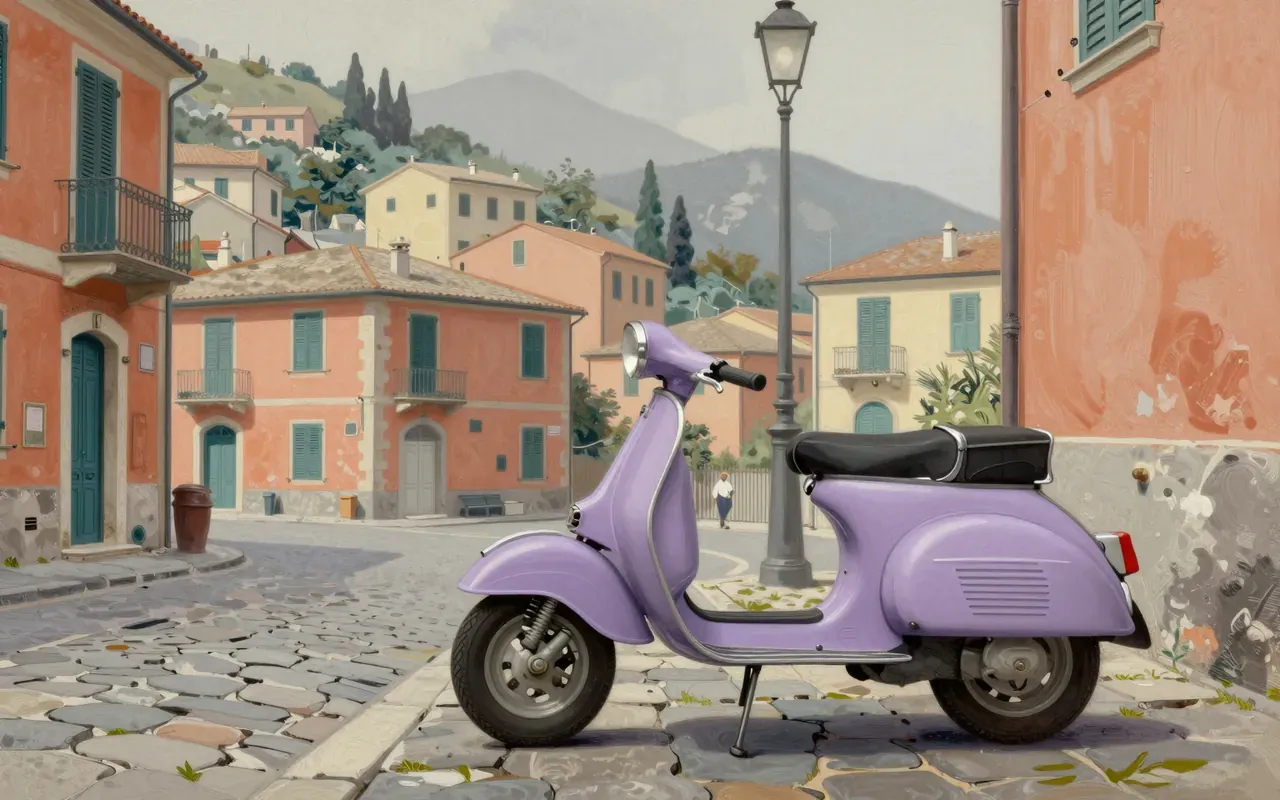
Vespa

Piaggio · 1946

The Vespa is a product of postwar industrial pragmatism—not engineering ambition. Its pressed steel monocoque, chainless drive, and flat floor solved social barriers to motorised transport: dirt, complexity, and gendered access. It worked because it was cheap to build, easy to maintain, and socially legible. It did not advance powertrain efficiency, suspension dynamics, or materials science. Its legacy is industrial, not technical.

More from technology

All briefs →
video still
10:03

Go (programming language)

Robert Griesemer, Rob Pike, Ken Thompson · 2009

Go is a statically typed, compiled programming language designed in 2007 by Robert Griesemer, Rob Pike, and Ken Thompson at Google to improve programming productivity for multicore, networked machines and large codebases. It combines static typing and runtime efficiency like C, readability and usability like Python, and high-performance networking and multiprocessing. Publicly announced in November 2009 and released as version 1.0 in March 2012, Go emphasizes simplicity, safety, and developer tooling — especially around concurrency via goroutines and channels, packaging, testing, and deployment — while deliberately omitting features like inheritance, assertions, pointer arithmetic, and implicit type conversions. Its design reflects a focus on the software development process itself rather than just language syntax or semantics.

video still
9:56

Haptic technology

Haptic tech doesn’t replicate touch—it substitutes it with calibrated vibrations, forces, and motions, and that substitution is all it ever promised to do.
video still
9:27

Lidar

Lidar wasn’t invented to map cities or drive cars—it was built to hit satellites and spot smog.