
HTML
HTML is not a programming language — it is a contract between author and browser about what text means, not how it looks.

GoPro is a hardware product line defined by physical constraints and use-case discipline—not AI, cloud, or ecosystem. Its value lies in solving one narrow problem exceptionally well: rugged, wide-angle, first-person video capture. Its evolution from 35mm film to digital HD reflects adaptation—not disruption.


Robert C. Webber’s 1948 invention was not the first heat pump—but the first to use the ground as a thermal source. Its efficiency gain comes solely from stable input temperature, not new thermodynamics. It remains niche because it requires land, excavation, and integration at build stage—not after.


Prometheus is a pull-based, label-driven time-series monitoring system built by SoundCloud in 2012 to replace StatsD/Graphite for containerised infrastructure. It works well for short-lived services and dimensional querying—but requires operational discipline around scrape targets and lacks native horizontal scaling or logging integration.
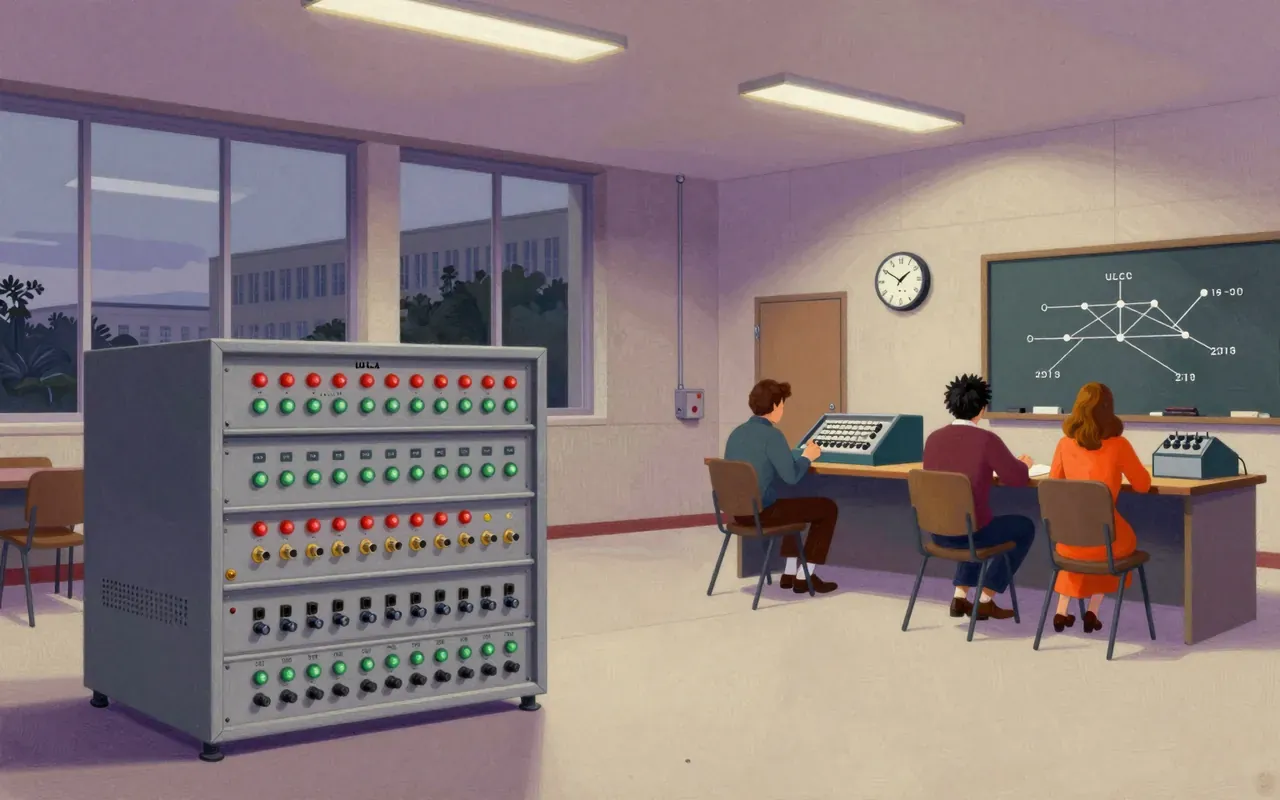






C is a deliberately minimal, hardware-close language that enabled Unix to become portable. It trades safety and abstraction for control and efficiency—and that trade still defines systems programming.

Rust delivers provable memory and thread safety through compile-time ownership and borrowing rules—not runtime enforcement. It works where it is applied strictly, fails where those rules are bypassed or ignored, and demands upfront investment in reasoning over runtime convenience. Its success lies not in eliminating trade-offs, but in making them explicit, auditable, and unignorable.



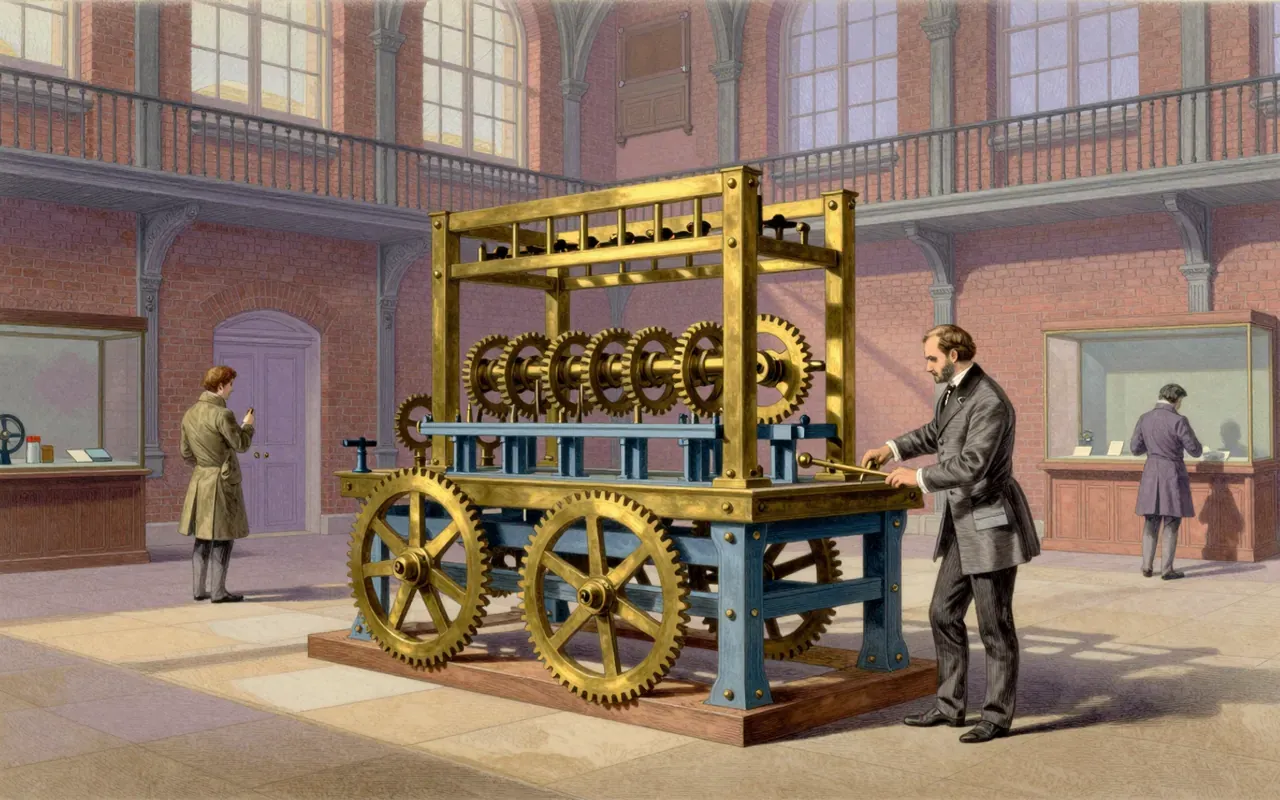
The difference engine is a proof that mechanical computation at high precision was possible in the 1820s—but only for one narrow class of problems, and only if built correctly. Its value lies not in what it delivered, but in what it demonstrated could be delivered.


AES is a narrow, standardised, symmetric cipher mandated by NIST in 2001. It works reliably only when implemented correctly. It solves no problems beyond confidentiality of bulk data under fixed parameters. It demands careful key handling and side-channel mitigation — which it does not provide.



JSON is a syntactic constraint, not a data model. It works because it refuses to be more than a wire format — and fails wherever meaning, safety, or evolution is required.


Lodge’s 1898 invention is the origin point of the moving-coil loudspeaker—but it was experimental, uncommercialised, and functionally limited. It proved electromagnetic transduction could move air. It did not solve amplification, fidelity, or scalability. Its value lies in principle, not performance.

The 1892 Froelich tractor is a functional prototype — not a product, not a platform, not a pivot point. It works once, in one place, for one purpose. Its mechanism is clear. Its failure is documented. Its influence is retrospective mythmaking.

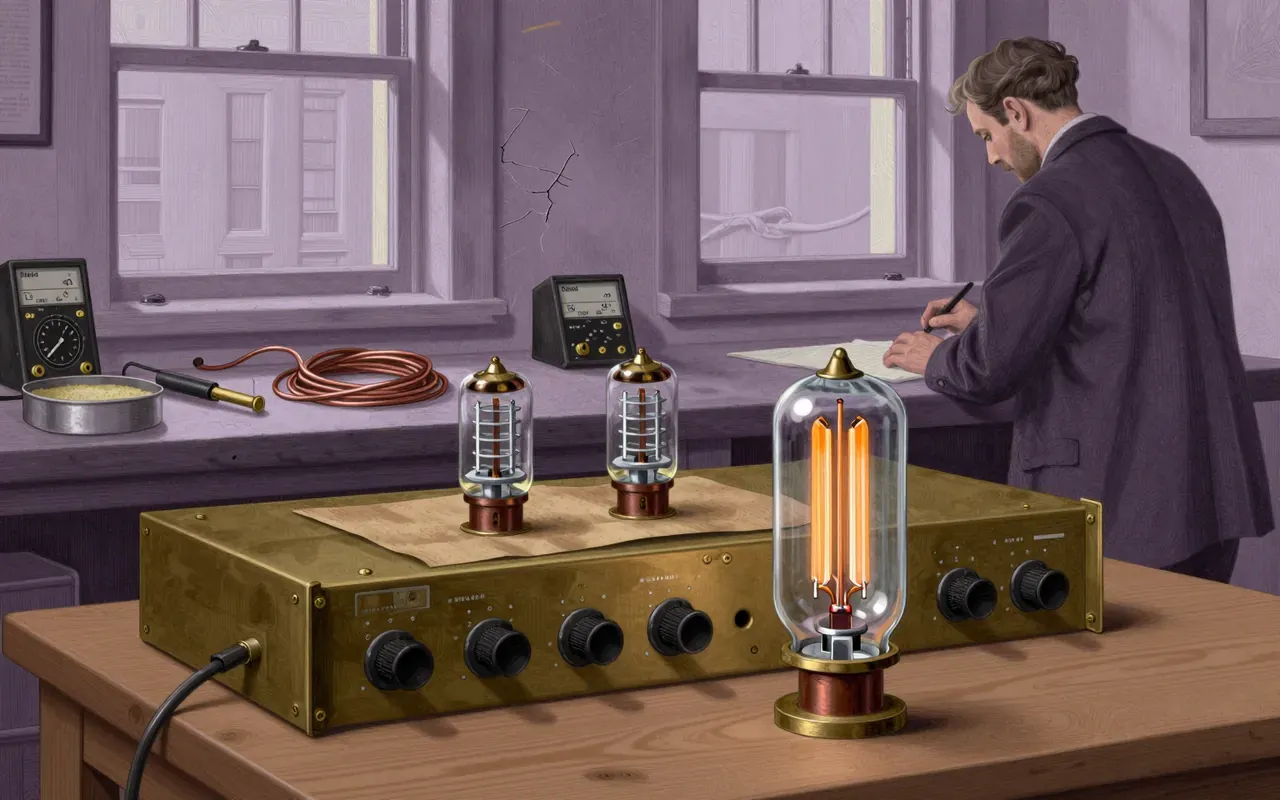
Lee de Forest’s triode valve amplifier is the first electronic amplifying device. It uses a control grid to modulate current flow. It first regenerated long-distance telephony signals. It amplified radio signals only slightly. It required residual gas and was initially unreliable. It enabled radio broadcasting, telephony, television, and computing.

MQTT delivers what it promised in 1999: a lean, brokered telemetry protocol for expensive, low-bandwidth links. It works — but only where its constraints match your environment. Its standardisation cemented utility, not evolution.



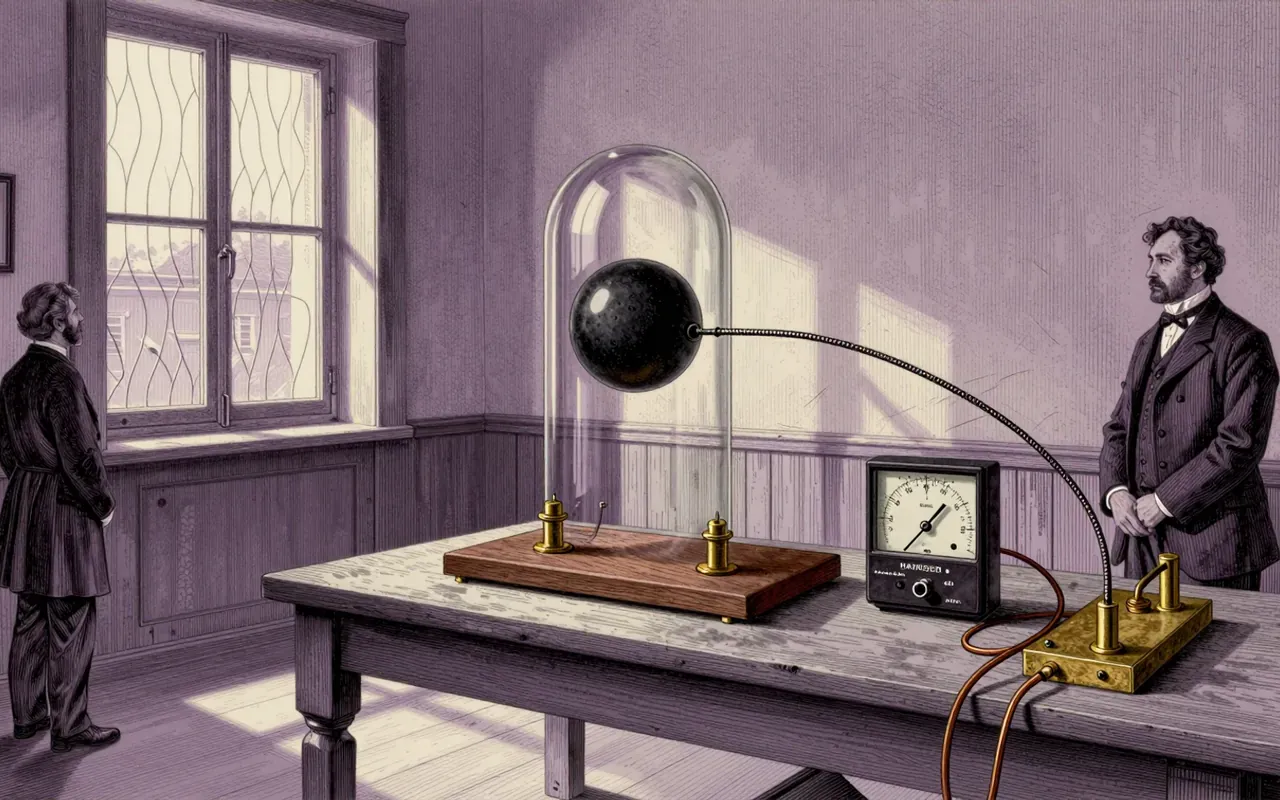
The thermistor is a semiconductor resistor whose resistance changes strongly with temperature. Michael Faraday discovered its NTC behaviour in silver sulfide in 1833. Commercial production did not begin until the 1930s due to manufacturing difficulty and limited applications. Samuel Ruben invented a commercially viable version in 1930.



Claude’s neon tube lighting was not the first gas-discharge light—but it was the first commercially viable one. Its success hinged on solving two engineering problems: keeping neon pure inside a sealed tube, and stopping electrodes from eroding under electrical stress. It turned air liquefaction waste into revenue. It did not enable low-power indicators—that came later, with Moore’s coronal-discharge lamp. It did not eliminate maintenance—it deferred it. Its real innovation was industrial integration, not physics.
Closed-loop control uses feedback to regulate dynamical systems. It requires sensors, a controller, actuators, and a plant. It improves disturbance rejection, stability, and accuracy over open-loop methods—but depends entirely on correct implementation, sensor fidelity, and controller design. Nicholas Minorsky is not mentioned in the source material.

HTTP is the minimal, functional core that made the Web possible — not because it was elegant, but because it was small, implementable, and free.