technologybriefs
Newest

All briefs

620 briefs · 6210 min · 193–288 on page 3 of 7
9:14

CubeSat

A launch interface masquerading as a satellite standard.
12:58

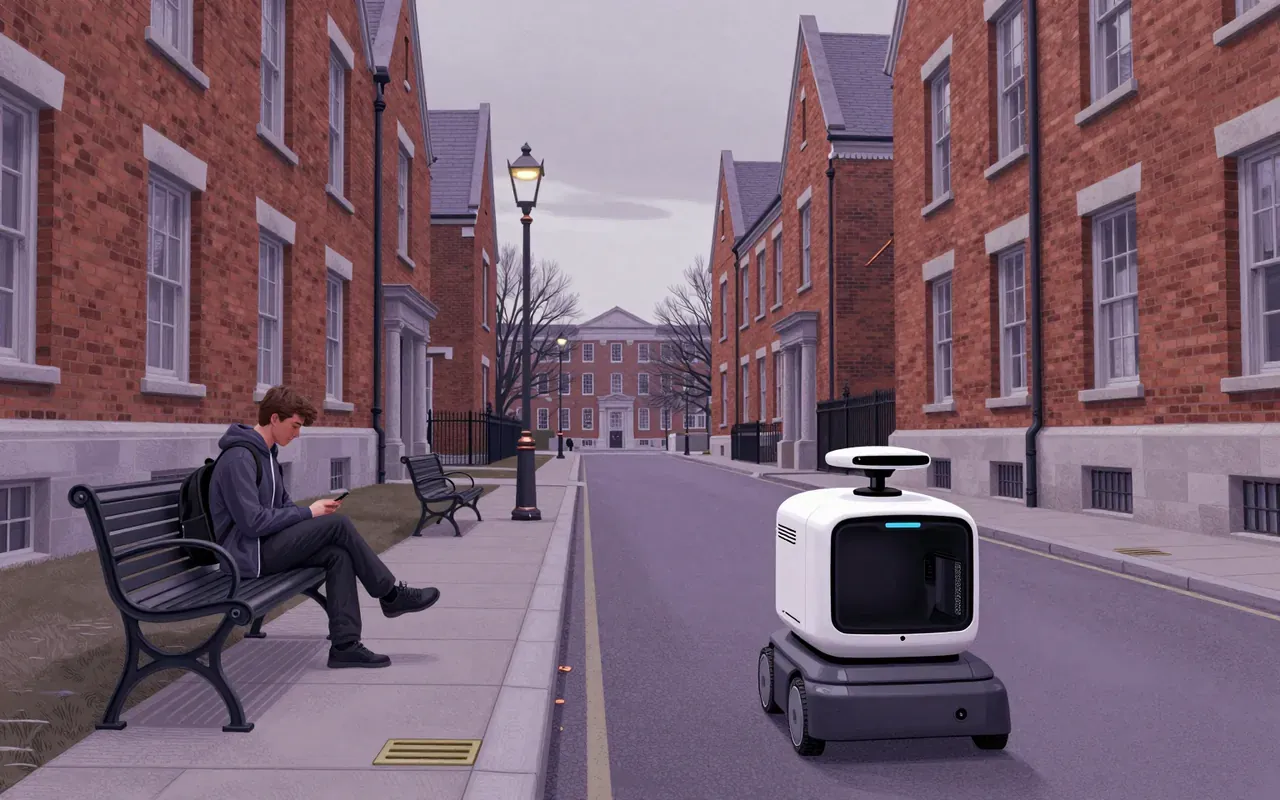
Delivery robot

Delivery robots are not the future of logistics — they are a stopgap for places where humans are expensive and terrain is tame.
10:06

Dell Technologies

A debt-fuelled merger, not a technology—Dell Technologies is infrastructure consolidation disguised as innovation.
9:18

Diffusion model

Diffusion models don’t generate images—they reverse entropy, one noisy step at a time.
9:42

Discord

Discord replaced the forum with the server—but made persistence depend on invitation, not openness.
9:34

E-reader

E-readers aren’t dying—they’re narrowing: the only device that trades interactivity for weeks of battery and perfect sunlight legibility.
9:18

Elasticsearch

Elasticsearch delivers real-time search—but abandons open source to do it.
9:29

ESIM

eSIM standardises SIM removal — not carrier control.
9:46

Expert system

Expert systems don’t think — they transcribe. What they deliver depends entirely on what experts wrote down, and nothing more.
10:20

Optical fiber

It does not carry electricity—but it carries light so precisely that medicine and telecoms had to rebuild themselves around it.
9:07

Firewall (computing)

Firewalls enforce boundaries — but they assume threats stay outside, and packets tell the truth.
9:47

Fitbit

Fitbit Inc. · 2007

Fitbit is a hardware product that delivers verified, location-dependent accuracy for step counting and heart rate—but fails at wrist-based calorie estimation and caused documented allergic reactions. It changed consumer expectations for passive tracking, not clinical standards.

10:07

Fitness tracker

It logs movement like a census — precise on headcount, blind to motive, health, or consequence.
9:45

Game engine

Game engines don’t accelerate creation — they accelerate reuse, at the cost of control.
8:14

Gaussian splatting

Gaussian splatting ditches ray-marching for splatting—and gains speed by abandoning geometry.
10:31

Gigabyte

A gigabyte is not one thing — it’s a legal fault line between what hardware delivers and what software displays.
9:34

GitLab Inc.

GitLab unifies DevOps—but only if you accept its gatekeeping, its config burden, and its American corporate pivot from a Ukrainian open-source start.
9:51

GNU

Free software began not with code, but with a resignation—and a recursive acronym.
9:48

Google Play

Google Play didn’t exist in 2008 — and pretending it did flattens the messy reality of Android’s early distribution wars.
10:54

Gorilla Glass

It doesn’t make glass unbreakable—it makes breakage predictable, controllable, and commercially viable.
9:31

Grafana

Grafana Labs

Grafana is open-source dashboard software that queries external data sources at render time. It unifies metrics, logs, and traces without storing data itself. Its JSON-based dashboards are versionable and composable. Since 2021, it uses AGPLv3 licensing. It originated from Graphite work at Orbitz and launched in January 2014. Its UI began as a fork of Kibana v3.

7:38

Hewlett-Packard

A light bulb—not transistors, not code—was HP’s first engineering breakthrough.
10:49

High-speed rail

High-speed rail is not fast trains on old tracks—it’s expensive infrastructure pretending to be transport policy.
8:50

HTML

HTML is not a programming language — it is a contract between author and browser about what text means, not how it looks.
10:57

Hughes Network Systems

VSAT built the first scalable satellite internet — then froze in geosynchronous orbit while the world moved to low Earth orbit.
8:49

Humanoid robot

Humanoid robots are not stepping into our homes—they’re stepping into our labs, as calibrated dummies for prosthetics and rehab.
9:33

Hyperloop

A dead-end technology masquerading as infrastructure — proven only in fragments, abandoned by its strongest backer.
9:40

IMac

The iMac isn’t about power—it’s about erasing the desktop’s ugly seams, one sealed, coloured shell at a time.
9:36

Automation

Automation is not about replacing people—it’s about locking decisions into metal, wire, and timing before the process begins.
9:47

Industrial robot

Industrial robots didn’t arrive with AI—they arrived with paper tape, solenoids, and a single-minded refusal to tire.
9:55

Inmarsat

A satellite network built for ships became the world’s first lifeline for remote operations—and its compromises still define what ‘global’ really means for connectivity.
9:14

Intelsat

Intelsat didn’t build the global internet—it built the backhaul for everything that couldn’t wait for fibre.
9:48

Internet Explorer

Internet Explorer wasn’t a browser — it was a distribution mechanism disguised as software.
10:01

Iridium

Iridium isn’t rare because it’s special — it’s special because it’s rare, and that rarity locks its utility into three narrow, high-stakes industrial niches.
10:01

Juniper Networks

Juniper didn’t invent the internet router — it weaponised packet switching against Cisco’s incumbency.
9:57

KDDI

KDDI isn’t a pioneer—it’s a consolidation engine that turned regulatory gaps into market position.
10:10

Kingston Technology

Memory wasn’t commoditised until Kingston proved it could be validated, branded, and sold outside the OEM.
9:45

Kotlin

Kotlin isn’t about elegance—it’s about eliminating Java’s tax on velocity, one stable release at a time.
9:24

Lenovo

Lenovo didn’t outsource its way to scale—it built its own factory floor to cut OEM dependence, and it worked.
11:19

Lockheed Martin

The 1995 merger didn’t create a tech innovator—it created the U.S. government’s default systems integrator.
9:45

Maglev

Maglev eliminates wheels — but not cost, complexity, or isolation from existing rail infrastructure.
9:30

Mellanox Technologies

Mellanox didn’t invent speed—it weaponised standardisation against latency, then vanished into Nvidia before its full Ethernet promise could be tested.
9:13

Memcached

Brad Fitzpatrick · 2003

Memcached is a distributed in-memory key-value store designed to reduce load on databases in dynamic web applications. It delivers speed by bypassing disk and network I/O—but requires manual cache management, offers no consistency guarantees, and assumes trust within the network. It works because it is minimal, not because it is clever.

9:50

MongoDB

MongoDB Inc. · 2009

MongoDB is a document-oriented database program released in February 2009. It uses JSON-like BSON documents with optional schemas. It implements its own query language (MQL). It supports indexing with primary and secondary indices. It provides high availability via replica sets. It scales horizontally using sharding. It can be used as a file system called GridFS. It is source-available and designed for unstructured data. It added ACID transactions to broaden enterprise appeal. It launched Atlas, a SaaS offering, in 2016. It replaced AGPL with the Server Side Public License in 2018. As of 2025, it ranked fifth among database software and served over 65,200 customers. Atlas became 70 percent of MongoDB's revenue by 2024.


9:02

Motion capture

Motion capture records movement — not performance, not intention, not life.
10:40

DynaTAC

Portability came at ten hours charging for thirty minutes talking — and that was the revolution.
8:35

MQTT

Andy Stanford-Clark and Arlen Nipper · 1999

MQTT delivers what it promised in 1999: a lean, brokered telemetry protocol for expensive, low-bandwidth links. It works — but only where its constraints match your environment. Its standardisation cemented utility, not evolution.
8:52

MS-DOS

MS-DOS didn’t invent personal computing — it licensed its way into becoming its gatekeeper.
10:58

MSI protocol

MSI isn’t elegant — it’s the minimal state machine that stops caches from lying to each other.
10:15

Multi-touch

Multi-touch was operational before the Macintosh—and its real innovation wasn’t gesture, but exact spatial concurrency.
9:48

MySQL

MySQL AB · 2001

MySQL AB’s 2001 product was a lightweight, open-source RDBMS built to replace mSQL. It solved developer pain around speed and licensing—but deferred complexity into operational trade-offs. Its success hinged on embedding itself into LAMP, not on technical superiority.

10:46

Neo4j

Neo4j Inc. · 2010

Neo4j is a graph database built for relationship-heavy workloads. It delivers expressive querying and transactional safety—but horizontal scaling, vector search, and unified standards arrived over a decade after launch. Its value is real, but bounded by what it ships—not what it promises.

9:53

Netbook

Netbooks weren’t a new kind of computer—they were a licensing loophole dressed as a product.
9:31

NeXT Computer

A sealed magnesium cube that proved integrated design was possible — and commercially stillborn.
9:52

NeXTSTEP

NeXTSTEP didn’t win the desktop — it rewrote the rules of OS design from the inside out.
10:21

Nissan Leaf

Nissan

The Nissan Leaf is a battery electric car produced by Nissan since 2010. It was unveiled on 1 August 2009 as the world's first mass-market electric and zero-emission vehicle. Production began on 22 October 2010 at the Oppama facility in Yokosuka, Kanagawa. The first generation used a 192-cell laminated lithium-ion battery pack co-developed with NEC, positioned under the floor between the wheels for optimized handling and space. Its motor delivered 80 kW (110 hp) and enabled ~160 km (100 miles) of range on a full charge. It was offered exclusively as a 5-door hatchback until 2025, when it became a crossover SUV model. By December 2020, cumulative global deliveries reached 500,000 units.


9:08

Nokia 3310

Durability isn’t a feature — it’s the entire product architecture.
10:33

NTT Docomo

NTT Docomo wasn’t a tech innovator in 1992—it was Japan’s first act of telecom privatisation theatre.
10:16

CUDA

CUDA didn’t democratise GPU computing—it weaponised it for Nvidia’s lock-in.
8:34

Objective-C

Objective-C didn’t bring objects to C—it brought uncertainty to the call stack.
9:58

Multiplayer video game

Multiplayer video games are not about playing together—they’re about negotiating presence across broken pipes.
9:51

Optical storage

Optical storage isn’t about speed or convenience — it’s about fixing data in place so it survives power loss, magnets, and time.
10:14

OS/2

OS/2 wasn’t killed by bad code—it was strangled by incompatible ambitions.
9:19

Packet switching

Packet switching doesn’t route data—it abandons it, trusting endpoints to find meaning in the wreckage.
10:40

PageRank

PageRank didn’t rank pages — it ranked links, and in doing so, rewired how machines read trust.
10:21

WebAuthn

WebAuthn doesn’t kill passwords—it just makes them optional for those who can afford the stack.
10:31

Password manager

It trades memorisation for concentration: one master password guards every door—and becomes the most valuable key in your digital life.
10:52

PDP-11

It didn’t invent computing — it made abstraction feel physical.
10:24

PDP-8

The PDP-8 didn’t invent the minicomputer—it weaponised price.
9:13

Philips

Philips didn’t invent the future — it licensed the present, then pivoted before the market caught up.
11:17

Photogrammetry

Photogrammetry doesn’t capture reality — it reconstructs geometry from the constraints of light, lens, and overlap.
9:55

Photolithography

Photolithography didn’t invent the microchip—it made mass production inevitable.
8:56

Physics engine

Physics engines don’t simulate reality—they choose which errors to tolerate.
10:18

PostgreSQL

University of California Berkeley · 1996

PostgreSQL is a free and open-source RDBMS that solves the problem of building reliable, scalable, and standards-compliant relational data systems without vendor lock-in. It emerged from Berkeley’s POSTGRES project in 1985 to address limitations in contemporary databases, especially Ingres’ lack of SQL support and type extensibility.


9:20

PowerBook

It didn’t invent the laptop—but it invented how you hold one.
10:57

Pratt & Whitney

Pratt & Whitney isn’t about innovation—it’s about infrastructure: a century of engines built to be rebuilt, not replaced.
10:11

PyTorch

Facebook · 2016

PyTorch is a Python-first deep learning library built by Meta in 2016 as Torch's successor. It enables rapid model prototyping via dynamic computation graphs (Autograd), tensor abstractions, and CUDA-accelerated training. As of 2025, it remains one of the most popular deep learning libraries—alongside TensorFlow and Keras—but its design prioritises researcher agility over production robustness, scalability, or deployment tooling.